
Recent geopolitical instability in the Middle East - including the escalation of direct military confrontation between Iran, Israel and the United States since late February 2026 - has once again placed force majeure at the centre of discussions across the construction, infrastructure and energy sectors.
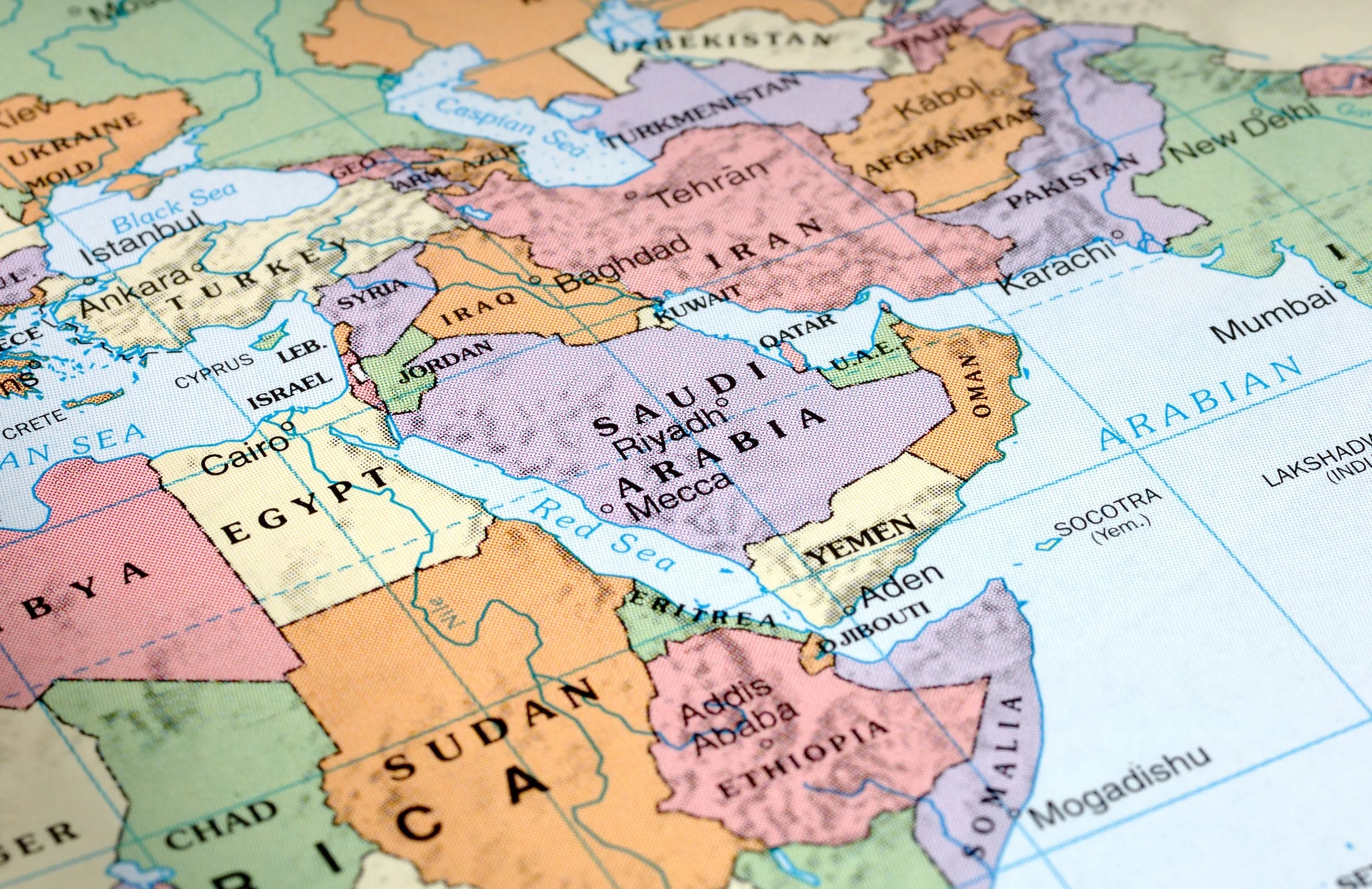
The current escalation has been accompanied by missile and drone attacks affecting multiple Gulf Cooperation Council (GCC) states, attempts to disrupt maritime traffic through the Strait of Hormuz, and intermittent airspace, shipping and logistics disruption across the region. These developments have had immediate knock‑on effects for project timelines, supply chains, site access and the availability of labour and materials. Events such as regional conflict, shipping disruptions or supply chain breakdowns inevitably raise the same question for contractors and project sponsors: can force majeure be invoked to suspend or excuse performance?
In large construction and infrastructure projects in the Middle East, however, answering that question requires addressing a more fundamental issue first: what law governs the contract.
The applicable law can significantly affect whether force majeure relief is available at all. Many construction projects across the region are structured around FIDIC-based contracts, often governed by English law, while subcontracts or local supply arrangements may be governed by domestic civil law systems.
Understanding the differences between these approaches is therefore essential before invoking force majeure or taking steps that may have contractual consequences.
A. Force Majeure Under Civil Law Systems in the Region
In many Middle Eastern jurisdictions, force majeure is recognised as a statutory concept embedded in civil codes. While the underlying principles are broadly similar across the region, the specific rules and consequences vary between jurisdictions.
Bahrain
Force majeure is recognised under the Bahraini Civil Code (Legislative Decree No. 19 of 2001).
Bahraini courts generally require that the event be:
unforeseeable;
irresistible; and
external to the parties’ control.
Where performance becomes impossible due to force majeure, the corresponding obligation is extinguished and the contract may terminate. Where the impossibility is temporary, performance may be suspended.
Bahraini law also recognises a hardship doctrine allowing courts to adjust contractual obligations where exceptional circumstances make performance excessively onerous.
Saudi Arabia
Saudi Arabia’s Civil Transactions Law (2023) contains explicit provisions addressing force majeure and impossibility of performance.
Force majeure is generally understood as an unforeseeable and irresistible event that makes performance impossible, rather than merely difficult or expensive.
The consequences depend on the extent of impossibility:
Total impossibility may result in termination of the contract.
Partial impossibility may extinguish only the affected obligation, while allowing the remainder of the contract to continue.
Saudi law also recognises “emergency circumstances”, allowing courts to adjust contractual obligations where performance becomes excessively burdensome.
Oman
Under the Oman Civil Transactions Law (Royal Decree 29/2013), force majeure is recognised where an external and unforeseeable event prevents performance of contractual obligations.
The consequences are broadly similar to other civil law systems:
Complete impossibility results in termination of the contract.
Partial impossibility extinguishes the affected obligations while the remainder of the contract continues.
Similarly to Bahrain and Saudi law, Omani law also provides a hardship mechanism, allowing courts to rebalance contractual obligations where exceptional circumstances render performance excessively onerous.
Iraq
The Iraqi Civil Code No. 40 of 1951 also recognises force majeure as a ground for relieving parties from contractual liability where performance becomes impossible due to an unforeseen external event.
In addition, Iraqi law recognises exceptional unforeseen circumstances allowing courts to modify contractual obligations where performance becomes excessively burdensome.
The legal consequences may therefore include:
suspension of obligations;
termination where performance becomes impossible; or
judicial modification of contractual obligations.
Across these jurisdictions, the core concept is broadly similar: force majeure generally requires impossibility of performance, rather than mere economic difficulty.
Where performance becomes excessively burdensome but not impossible, the issue may instead fall under hardship or exceptional circumstances, allowing courts to rebalance the contract rather than terminate it.
For construction and infrastructure projects in the region, these statutory rules often operate alongside contractual force majeure clauses in FIDIC-based contracts.
B. Force Majeure Under English Law
The position is fundamentally different where the contract is governed by English law, which is frequently chosen for major international construction projects in the Middle East.
Under English law, force majeure is not a general legal doctrine. It exists only as a contractual mechanism.
This means that the starting point is always the contract itself.
A party seeking to rely on force majeure must analyse the specific clause and demonstrate that:
the event falls within the categories listed in the clause;
the event meets the contractual threshold (for example, performance being “prevented”, “hindered” or “delayed”);
the event directly caused the inability to perform; and
reasonable mitigation steps were taken.
English courts interpret force majeure clauses according to ordinary principles of contractual interpretation, meaning the precise wording of the clause will determine the outcome.
Importantly, the fact that performance has become more expensive or commercially unattractive will rarely be sufficient.
Where no force majeure clause applies, the only possible fallback is the doctrine of frustration. Frustration arises where an unforeseen event occurs after the contract is formed which makes performance impossible or renders the contractual obligations radically different from those originally contemplated.
However, the threshold is very high and the doctrine rarely applies in complex commercial or construction contracts.
Conclusion
The current geopolitical instability is a reminder that force majeure analysis cannot stop at the contractual clause itself.
In complex construction and infrastructure projects - particularly in the Middle East - the governing law of each contract may ultimately determine whether relief is available at all.
For project sponsors, contractors and suppliers, a holistic review of the contractual structure is therefore essential before invoking force majeure or taking any step that could trigger termination rights or dispute resolution mechanisms.
How Rosenblatt Law Can Help
Rosenblatt Law’s international arbitration and construction disputes team regularly advises clients on force majeure, hardship and contractual risk allocation in complex international projects, particularly in the energy, infrastructure and construction sectors.
We can assist with:
reviewing construction and EPC contracts (including FIDIC forms) to assess the availability of force majeure relief;
analysing the interaction between contractual provisions and applicable law across multi-jurisdictional project structures;
advising on strategic options before invoking force majeure, including notice requirements and mitigation obligations; and
representing clients in international arbitration and construction disputes arising from project disruption.
In periods of geopolitical uncertainty, early legal analysis can be critical to protecting contractual rights and avoiding unintended dispute exposure.
Contact Details
Dr. Leonardo Carpentieri and Sara Paradisi co-head the firm's International Arbitration and Construction Disputes practice - leonardo.carpentieri@rosenblatt.law and sara.paradisi@rosenblatt.law